


It’s not surprising if your child complains about going to school from time to time. Maybe they’re nervous about a math test or a presentation. That’s inevitable.
But when fear and anxiety regularly keep your child from getting on the bus, walking into the building or staying in class, it’s likely something more than just a case of the jitters.
Pediatrician Ellen Rome, MD, and child psychiatrist Joseph Austerman, DO, explain what school refusal is, why it happens and how you can help your child approach school with confidence.
What are school refusal and school avoidance?
School refusal (sometimes called school avoidance) describes anxiety or emotional distress that keeps a child from attending school regularly. Some people also use the term scolionophobia, meaning a fear of school. None of these are official medical diagnoses.
Unlike a child who cuts class out of spite or simply because they don’t want to go, children with school refusal usually want to attend. But worries about school become so overwhelming that getting there — or staying there — feels impossible.
Some reports estimate that up to 15% of school-aged children experience school avoidance or don’t attend school regularly due to emotional distress.
“School refusal isn’t about laziness or defiance,” Dr. Austerman explains. “It’s a matter of insecurity and overwhelming anxiety.”
Common signs of school anxiety
School refusal can look different depending on a child’s age and what’s driving their anxiety. Common signs for parents and caregivers to look out for may include:
- Behavioral challenges, like crying, tantrums or arguments before school
- Frequently missing school or visiting the school nurse
- Pleading to stay home in the morning or calling or texting throughout the day asking to leave early
- Physical symptoms, like headaches, stomachaches or other complaints that don’t have a medical cause
What causes school refusal?
School avoidance can stem from a range of concerns. And those challenges can snowball and make getting through the school day a monumental hurdle.
Possible causes include:
- Social concerns, like bullying, conflicts with friends or worries about fitting in
- Academic pressure, like learning difficulties, concerns about grades or a looming test
- Stressful events at home, like divorce, moving or financial insecurity
- Recent time away from school, like after summer break or a brief illness
- Safety concerns, like worrying about school violence, fires or natural disasters
- Mental health concerns, like anxiety disorders or depression
“The first step is to look for what’s triggering your child’s anxiety,” Dr. Austerman says. “If you don’t know where the worries are coming from, you can’t unpack them and manage them.”
How to help with school anxiety
Every child is different, and so are their reasons for avoiding school. But some tried-and-true strategies can help lower school anxiety and keep school avoidance from becoming a long-term pattern.

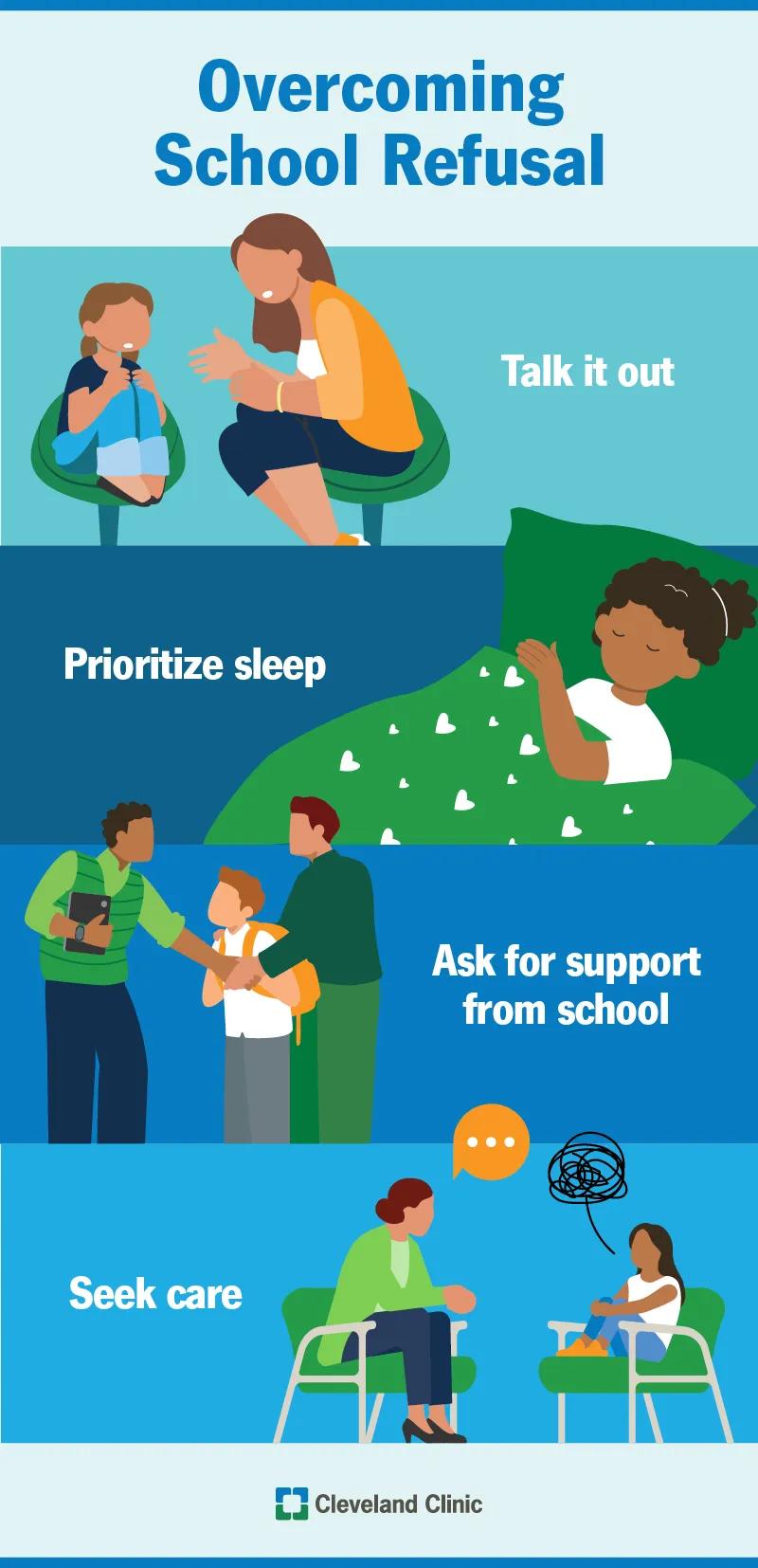
1. Talk about what’s happening
Giving your child space to talk about their worries is an important first step — and how you approach those conversations can make a big difference.
Instead of a generic “How was school?” ask specific questions that encourage conversation, like:
- What was the best part of your day?
- What was the hardest part?
- Who did you sit with at lunch?
- Yesterday you said you were worried about your test. I am super proud of how hard you worked on that and for showing up when the going gets tough. How did it go?
In asking, while simultaneously praising effort, you have an opportunity to promote a growth mindset and help them reframe themselves as competent and brave. That inner dialogue matters.
“When we set high expectations for our kids, they often rise to that expectation,” Dr. Rome says. “When we lower that bar, they’ll often accelerate down to that lower expectation. It can help to frame things in ways that imply positive attributes that you want to reinforce.”
2. Prioritize sleep
Sleep plays an important role in helping children regulate their emotions and cope with stress. How much sleep your child needs will vary, but in general:
- Kids between the ages of 6 and 12 should get about nine to 12 hours of sleep each night.
- Teens should get between eight and 10 hours of sleep, with nine to nine and a half hours being optimal.
Dr. Rome recommends:
- Keeping consistent bedtimes and wake-up times
- Limiting (or ideally, avoiding) caffeine, including coffee, soda and energy drinks
- Keeping phones, TVs and other devices out of their bedroom
- Turning off screens and limiting physical activity for at least one hour before bed
3. Partner with the school
Teachers, counselors and school administrators can be valuable members of your child’s support team.
“Share what you’re seeing at home, ask what they’re noticing at school and work together on strategies that can make the school day feel more manageable,” Dr. Rome advises.
4. Know when to seek professional help
It’s normal for children to have occasional worries about school. But if your child refuses school or experiences significant anxiety or physical symptoms for two weeks or longer, it’s time to talk with a children’s healthcare provider.
The goal isn’t simply getting your child back into the classroom — it’s helping them address all that’s keeping them from learning and participating.
A qualified therapist can develop solutions to make it easier to consistently attend school. Treatment may include talk therapy (cognitive behavioral therapy) and, in some cases, medication.
But again, getting to the root of the issue is key. Dr. Austerman notes: “If a child is refusing school because they’re being bullied, for example, medication isn’t going to solve the problem.”
Remember, too, that physical and mental health often go hand-in-hand. So, if your child is complaining of stomachaches or headaches before school, don’t assume they’re “faking it.”
“Big emotions like anxiety and fear can cause very real physical symptoms,” Dr. Rome explains. “Seeing a pediatrician can help look closer at those symptoms and figure out what’s actually causing them.”
Final thoughts
School refusal isn’t about a child being “difficult.” It’s often a sign that something deeper is going on.
“The sooner you explore what’s behind your child’s behavior, the sooner you can help them feel more confident about returning to school,” Dr. Austerman encourages. “Don’t minimize it. And the earlier you can address it, the better.”
This article was written by Cleveland Clinic Health Essentials (editorial@ccf.org) from Cleveland Clinic and was legally licensed through the DiveMarketplace by Industry Dive. Please direct all licensing questions to legal@industrydive.com.


